

Short news

Ghent University rector Petra De Sutter was set to receive an honorary doctorate from the University of Amsterdam next week, but has decided to decline after multiple AI citations were discovered in her inauguration speech.
“Dogma is the enemy of progress, as you may know.” In her speech last September, the new rector Petra De Sutter quoted Albert Einstein, among others. But what turned out? He never uttered these words; the quotes were fabricated by AI.
The Ghent-based gynecologist was to receive an honorary doctorate from the University of Amsterdam (UvA) next week for “her important contributions to medical science” and her “influential social engagement”, but that will no longer happen.
Not an appropriate moment
De Sutter has announced that she is withdrawing from the ceremony. She feels that, given the circumstances, it is not an appropriate moment and, moreover, she does not want to harm UvA, according to university newspaper Folia. An UvA spokesperson said they understand the decision and call it “the right step”.
During her election campaign (rectors are elected in Belgium), the rector warned against the blind use of AI. Now she is taking responsibility: “I deeply regret that I fell into this trap. This experience has been a good lesson for me and will undoubtedly further stimulate the debate on the use of AI,” De Sutter told VRT NWS.
HOP, Naomi Bergshoeff

Master’s student Tijmen Snel has secured qualification for the Olympic Games in Milan. At the Olympic Qualification Tournament (OQT) held in Thialf at the end of December, he recorded the second-fastest time in the 1,500 metres, earning an Olympic starting place.
In the 1,500 metres, Snel was beaten only by Joep Wennemars. Wennemars won in 1:43.43, while Snel finished second in 1:44.33, thereby securing his first-ever Olympic appearance.
For the Biomechanical Design student, qualification represents sporting redemption. Four years ago, Snel appeared set to qualify for the Olympic Games in Beijing, but despite finishing third in the 1,500 metres he was not selected. At the time, the selection committee of the Royal Dutch Skating Association (KNSB) opted for team-mate Marcel Bosker, who was deemed an indispensable member of the team pursuit squad.
Recommended reads

Selection matrix
The KNSB uses a pre-determined selection matrix for Olympic qualification. The Netherlands may enter two to three skaters per distance, but may send only nine men and nine women in total. As a result, some skaters compete in multiple events, while others may be omitted, even after finishing on the podium at the Olympic Qualification Tournament.
The ranking within the matrix is based on previous international performances and expected medal prospects. In addition, there are three discretionary selection places per gender, for example to assemble strong teams for team pursuits such as the team sprint.
This selection method proved disadvantageous for master’s student Naomi Verkerk (Technical Medicine). She finished third in the 1,000 metres at the Olympic Qualification Tournament, yet was nevertheless left out of the final selection. In the matrix, she placed tenth, just outside the group of nine women the Netherlands is allowed to send.
Curling
Master’s student Tobias van den Hurk (Computer Science) will also not be competing in Milan. Together with the Dutch curling team, he narrowly missed qualification at the Olympic Qualification Tournament in Kelowna, Canada. The team finished fifth but needed to place among the top three nations to secure one of the two available Olympic berths.
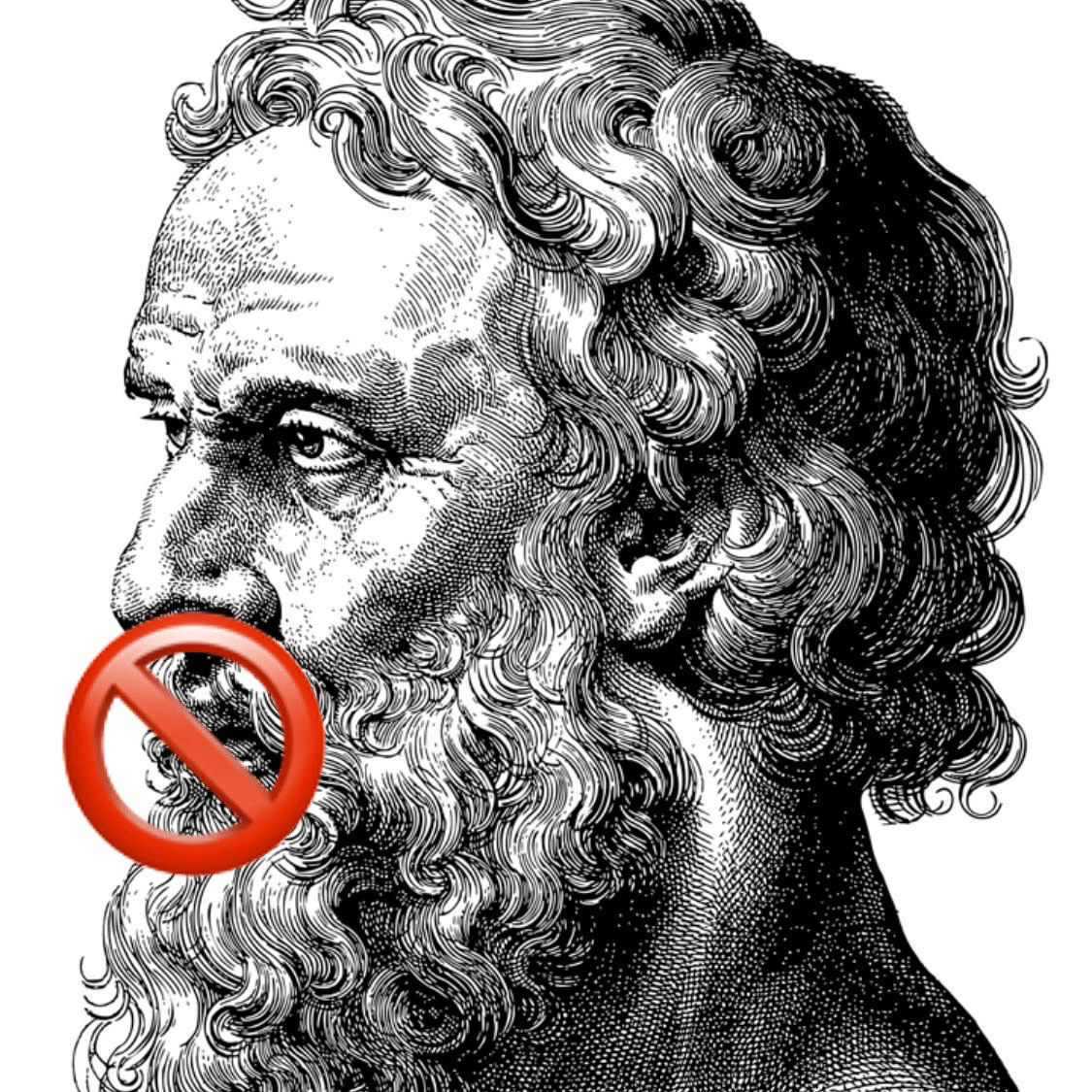
You are free to read Plato, just not when he writes about race or gender. A professor of philosophy at a major university in Texas has been required to skip certain texts in his classes.
The history of philosophy is sometimes described as a series of footnotes to Plato. The Greek philosopher lived around 400 BC and is one of the founders of Western philosophy.
But in the United States, it is no longer allowed to teach freely about topics such as racism and gender. Even Plato has not escaped censorship. Texas A&M University, one of the largest public universities in the US, wants philosophy professor Martin Peterson to remove certain texts deemed controversial from his teaching.
Peterson sounds bewildered in an interview with the New York Times: “A philosophy professor who is not allowed to teach Plato? What kind of university is that?”
Ethics
His course focuses on ethics and addresses contemporary issues such as abortion, the death penalty, equal rights, racism, and gender. It will come as no surprise to anyone in the United States that his classes are under fire. But the fact that even certain passages from Plato on love have to be removed from the reading list shows how much academic freedom in the US is under pressure.
President Trump views universities as adversaries and at times exerts heavy financial pressure to bring them into line. US science policy also affects Dutch academia, for example when American journals no longer accept certain articles or when collaboration becomes difficult.
The largest collaboration between Texas A&M University and TU Delft is in the field of flood research. The project is lead by Bas Jonkman, professor of hydraulic engineering (Faculty of Civil Engineering and Geosciences). He notes that, within the area of coastal protection, they have so far noticed no restrictions or changes in policy.
HOP, Bas Belleman
Things went wrong during the transition to a new administration system: on Monday, employees at Leiden University suddenly found themselves able to view the personal data of their colleagues, among others.
Names, home addresses, and sometimes even phone numbers… the personal data of everyone who had submitted an invoice to Leiden University was suddenly visible to all university employees, as discovered by the university magazine Mare. Private data belonging to various board members, deans, and the protected professor of law Afshin Ellian could also be accessed.
Transition to new computer system
The data breach occurred on Monday morning during the transition to a new computer system for financial and administrative matters. The IT department had already discovered it and the problem was resolved that same day, after a few hours. According to the law, the university is obliged to report the breach to the Dutch Data Protection Authority (AP).
A few weeks ago, the AP imposed a fine of €175,000 on the Arnhem and Nijmegen University of Applied Sciences for failing to adequately protect its employees’ data. Four years ago, a single vulnerability in the system led to the data of hundreds of thousands of people being exposed. In 2020, TU Delft suffered a data breach after an unencrypted laptop was stolen. (HOP, NB)

Despite the persistent winter weather, lectures and exams at TU Delft will continue as usual on Wednesday. This was decided by the Executive Board (CvB) on Tuesday (intranet). The university is also not advising its employees to work from home, unlike Rijkswaterstaat (Dutch infrastructure agency, in Dutch), which did so earlier on Tuesday due to heavy traffic and dangerous conditions on the roads.
Nevertheless, many students stayed at home on Tuesday, Delta heard from those who were on campus that day. In some cases, only a few students were present in lecture halls built for many more. The winter weather, combined with the disruption to the NS rail network on Tuesday, meant that many of their fellow students were simply unable to attend, they said. Some students reported that resit examinations had been cancelled.
This is not TU Delft-wide policy. Just like exams, tests will in principle continue as usual, according to the Executive Board. However, it does state that lecturers can make their own decisions if necessary. The fact that TU Delft is not making any adjustments is due to the relativity low weather warning, says the Executive Board. Students and staff must therefore weigh up for themselves what is safe and feasible. A code red would trigger an urgent travel advisory, but codes yellow and orange do not.
More snow
The KNMI has again issued code yellow for Wednesday since another three to seven centimetres of snowfall is expected during the day. TU Delft is monitoring developments closely, the Executive Board writes, and will inform students (via Brightspace) and staff (via the intranet) if the situation changes. If necessary, TU Delft-wide advice will follow.
Utrecht University did take measures on Monday and Tuesday, cancelling all lectures and examinations.

The European Commission wants to tackle the housing crisis, including for students. However, Peter Boelhouwer, professor of Housing Systems at TU Delft, warns that “real solutions can only be found in the Netherlands itself.”
In December, the European Commission presented its plans to tackle the housing crisis. Normally, Brussels does not interfere in the housing market, the Commission writes. But the crisis has now become so severe that it wants to intervene.
The European Commission also promises to help young people and students find “affordable and decent housing”. This will involve new investments in student housing and the relaxation of rules. Boelhouwer thinks this is positive: “In the long term, these plans could help, but that depends on how they are implemented.”
Problem is bigger in the Netherlands
Students in other countries also have difficulty finding accommodation, but according to Boelhouwer, the problem is bigger in the Netherlands. “Universities in other countries often have campuses where students are housed. They have dormitories where they can sleep. That is not the case here. As a result, students in the Netherlands are more dependent on the private market and housing associations such as DUWO.”
He expects more European funding for student housing, but thinks the effect will be smaller in the Netherlands than in other countries. “In the Netherlands, financing is not such a big problem. Housing associations can borrow relatively easily and cheaply.”
Many of the European plans focus on the mid-range sector, while students mainly rent in the social sector. “And not much is changing there.”
According to Boelhouwer, it will take years before the plans have any effect. “We must find the most important solutions in the Netherlands itself. All the rules and taxes have made renting out properties less attractive. Housing associations are suffering heavy losses. They still have their own resources, but these are likely to run out in the coming years. If that happens, they will no longer be able to invest.” (HOP/NB)
Anyone wishing to study on campus between Christmas and New Year’s Eve should bear in mind that some buildings will be closed. The faculties of Architecture and the Built Environment, Civil Engineering and Geosciences, Applied Sciences and Technology, Policy and Management and the Pulse teaching building will be closed.
Aerospace Engineering, Industrial Design Engineering, Mechanical Engineering and Electrical Engineering, Mathematics and Computer Science are open between the holidays. The Echo teaching building will also remain open, with adjusted opening hours. As always, the Library will be open until midnight.
On 25 December, 26 December and 1 January, all buildings will be closed, with the exception of the Library. Friday 2 January has been designated by TU Delft as a collective day off for all staff: only the Library and Echo will be open on that day.
Each faculty is free to determine its own opening hours. “This year, we have taken even greater care in how we manage our people and resources”, says the spokesperson for TPM. The closure means that the building’s heating can be turned down low. It also reduces the need for security and facility staff. They are not obliged to take time off, according to the spokesperson.
Not really a problem
For students who are studying at the faculty during this last week before the Christmas holidays, the closure is not really a problem, according to a brief survey by Delta. Cor (23, Systems Engineering, Policy analysis and Management) thinks it is a logical choice. “In terms of energy and personnel, it doesn’t seem worth keeping the buildings open for so few people.”
Elke (22, Mechanical Engineering) agrees, but emphasises that there must be enough space for those who do want to study on campus. That will be fine, Cor thinks. “I’m going to sit in the Library, where it’s always super quiet during the holidays anyway.”
- All opening hours for the educational buildings during the Christmas holidays can be found in the student portal or in Spacefinder.
- Many catering establishments on campus are also closed during the Christmas holidays. An overview of these opening hours can also be found in the student portal.

A rent of, for example, €500 could rise to €520 next year in the social sector (which includes many student residences) or to €536 for a room in a private student residence. This would amount to an additional €250 to €370 in housing costs per year.
The Spring Memorandum stated that rents in the social sector would be frozen in 2025 and 2026. However, the now outgoing Minister of Housing, Mona Keijzer, decided to withdraw this bill last spring. According to her, there would otherwise not be enough money left for new construction and maintenance of housing.
As a result, rents in the social sector may increase by 4.1 per cent and in the private mid-range rental sector by 6.1 per cent. This was announced by the cabinet this week. These are the maximum increases that landlords are permitted to implement.
Rent allowance
A fortunate turn is that from 2026, young people will be more often entitled to rent allowance. Previously, students under the age of 23 only received rent allowance if their rent was low (up to €477). Now, they can always apply for rent allowance from the age of 18, although for higher rents this is still limited until they reach the age of 21.
Incidentally, the rent allowance only applies to independent dwellings such as studios and therefore not to rooms in shared houses.
HOP, Naomi Bergshoeff

What is the brand name Lay’s doing on the new waste bins on campus? That is what the Student Council asked the Executive Board last Thursday. The subject is causing quite a stir. Delta also received tips about it.
The waste separation units are being installed in more and more TU Delft buildings this month. They consist of four bins, for paper, organic waste, plastic and residual waste. Above each bin, there is a photo of the type of waste that belongs in it.
Recognisability of packaging
The photo above the orange plastic waste bin is particularly controversial. It shows a bag of Lay’s crisps that looks as if it has not yet been opened. The Student Council wanted to know on Thursday whether Lay’s had paid for this. And if not, why is it being advertised?
Lay’s did not pay for the photo, said Rector Magnificus Tim van der Hagen. You might wonder why there is a brand name on the bins at all, he added. According to Executive Board member Nick Bos, the packaging was chosen for its recognisability. ‘Apparently, bags of crisps are often thrown away in the bins, which is why this was chosen.’
The arrival of the waste separation units was announced on the intranet in September. Instructions on which waste belongs in which bin can also be found there.
The Netherlands must spend billions of euros on knowledge, innovation and infrastructure, advises former ASML CEO Peter Wennink in a report requested by the outgoing Cabinet in early September.
‘Whereas Europe once played a pioneering role in innovation, this has not been the case for years,’ it states. The report throws around billions. The idea is that additional public spending would also persuade companies to open their wallets. This brings the report’s total to between 151 and 187 billion euros over the next ten years.
Internationalisation
Wennink advocates an ‘active and targeted migration and settlement programme that encourages foreign talent to come to the Netherlands and continue working here.’ This mainly concerns students and knowledge workers in engineering, ICT, energy and biomedical technology.
Further training
There should also be more scope for retraining and further training. In connection with this, Wennink wants to restrict the rights of employees. He believes that social security and labour market policy need to be ‘recalibrated’. ‘Permanent contracts are too rigid, flexible contracts too uncertain.’
Trade unions
Trade unions are sceptical. ‘We recognise the urgency of investment, but the need to reduce regulatory pressure cannot be at the expense of social protection for employees,’ says Nic van Holstein, Chairman of the VCP trade union federation. ‘It is inconceivable that decisions are being made about us without us.’
TU Delft
The Dutch Association of Universities (UNL) embraces the report, as does TU Delft Rector Magnificus Tim van der Hagen. ‘For the future, we now have a great need for stable funding for our education, research and the valorisation of our knowledge,’ he says in a press release.
HOP, Bas Belleman


